

No products in the cart.
Silverettes: Helpful Tool or Overused Trend?
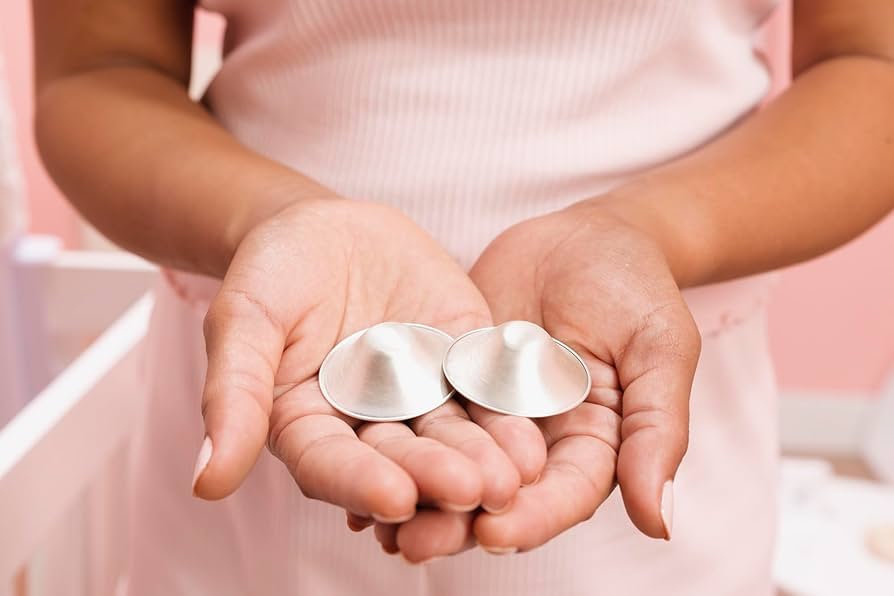
Silverettes have become incredibly popular over recent years, particularly amongst breastfeeding mums looking for support with sore or damaged nipples.
And while they can have a place, I think it is really important that families understand they are not generally recommended for continual or long-term use.
One of the biggest concerns with ongoing Silverettes use is that they keep the nipple constantly moist.
While moist wound healing has benefits in some situations, nipples also need airflow and opportunities to dry naturally. Continual moisture can sometimes contribute to ongoing irritation, delayed healing, skin breakdown and, in some cases, create an environment where issues such as thrush are more likely to develop.
The research is actually quite mixed — and that’s where a lot of the confusion comes from.
Historically, many breastfeeding resources recommended air drying nipples and “letting them dry out.” More recent wound-healing research has shifted toward the concept of moist wound healing, where a controlled moist environment may help damaged skin heal faster.
However, the important distinction is this:
“Moist wound healing” does not necessarily mean keeping nipples continuously wet or occluded 24/7.
That’s where some concerns around continual Silverette use come in.
Current evidence suggests:
Some moist-healing approaches (like hydrogels or lanolin) may improve comfort and healing compared to completely dry wound care.
But excessive moisture and prolonged occlusion can contribute to maceration where skin becomes overly soft, fragile and breaks down more easily.
The lactating nipple is unique because it is repeatedly exposed to friction, suction and moisture, making “too much moisture” potentially problematic.
The Australian Breastfeeding Association states there is no strong evidence that silver nipple caps are superior for healing sore nipples, and they should not be used routinely on healthy nipples. There’s also very limited high-quality research specifically on Silverettes themselves. Much of the discussion around them is based on:
general moist wound healing principles,
anecdotal parent experiences,
and small or lower-quality studies.
So the balanced takeaway is probably:
A slightly moist healing environment may help some nipple wounds heal faster than complete drying/scabbing.
But nipples also benefit from airflow and avoiding continual overhydration.
Silverettes may provide short-term comfort and protection from friction for some parents.
They are unlikely to fix the underlying cause of nipple trauma.
Continual use that keeps nipples persistently wet may increase the risk of maceration or irritation.
The strongest evidence still points to this: Correcting latch, positioning and feeding mechanics is the most important part of healing nipple trauma.
Painful breastfeeding is often a symptom, not the problem itself.
Things that may need further assessment include:
- Attachment and positioning
- Latch quality
- Tongue function/oral restrictions
- Feeding frequency
- Breast engorgement
- Pump flange sizing
Just to name a few!
Breastfeeding should not feel like you are “just surviving” the pain.
If feeding is persistently painful, cracked, bleeding or causing distress, please seek support from a trusted lactation consultant, midwife or breastfeeding professional.
Early support can make a huge difference with your breastfeeding journey
As always, every family and every feeding journey is different. What works beautifully for one mum may not work for another — and that is completely okay.
* The information contained in this website is for general information purposes only. The information is provided by Parents2b and while we endeavour to keep the information up to date and correct, we make no representations or warranties of any kind, express or implied, about the completeness, accuracy, reliability, suitability or availability with respect to the website or the information, products, services, or related graphics contained on the website for any purpose. Any reliance you place on such information is therefore strictly at your own risk.
May 27, 20260
0 comments
Write a comment