

No products in the cart.
Introducing the bottle – when is the best time?
Breastfed baby + bottle refusal? You’re not alone.
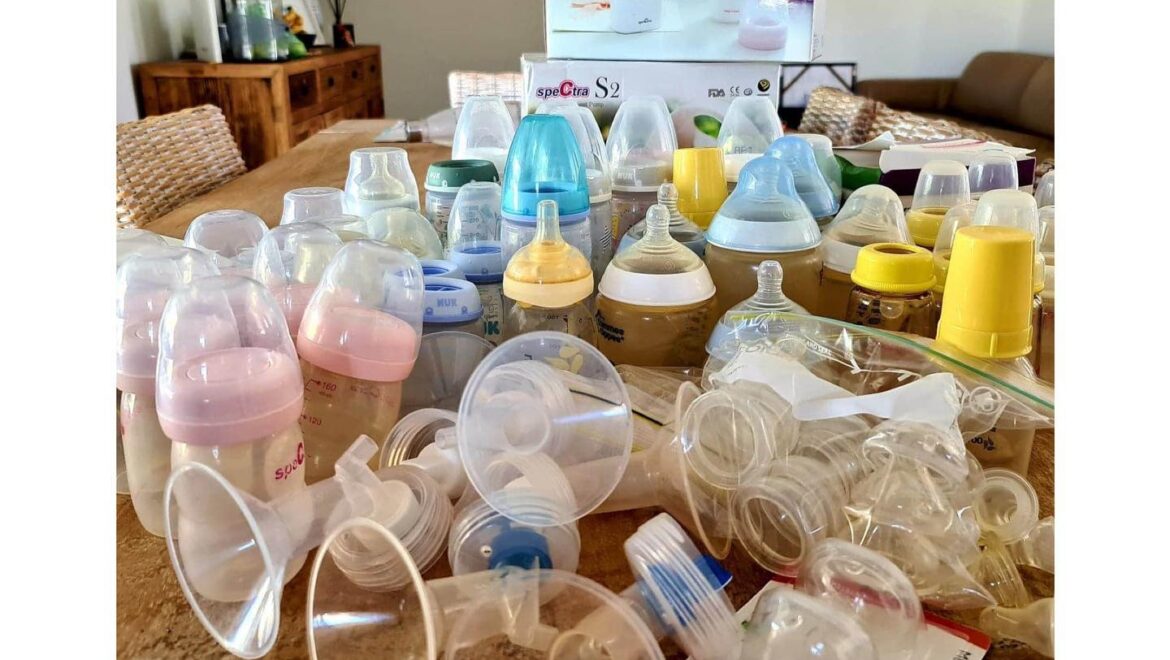
This collection of bottles is very common in homes where a breastfeeding mum is preparing to return to work. Trying to get a breastfed baby to take a bottle can be challenging — and many parents try multiple bottles with little success.
So… what’s the secret?
Unfortunately, there isn’t one.
What works for one family may not work for another — and that’s parenting. You need to do what works for you and your baby.
✨ A few important points to consider:
The World Health Organization recommends exclusive breastfeeding for the first 6 months, with breastfeeding continuing alongside solids for up to 2 years and beyond.
However, some families need their baby to take expressed milk — for example, when mum is returning to work or baby will be cared for by others.
Once breastfeeding is well established — and respecting each mother’s informed feeding choices — P2B often suggests offering a small bottle of expressed breastmilk once a day, around 20ml.
This bottle:
• Is not meant to replace a breastfeed
• Is not about dropping a feed (unless that’s your choice)
• Is simply about familiarity
By keeping the bottle part of the routine, your baby is more likely to accept a full feed later when it’s truly needed.
⚠️ A common pitfall:
Parents practise bottle feeds for a few weeks, see success, then stop offering it — only to find it’s refused weeks later.
You don’t become a runner by running once… you become one by practising regularly.
✨ When to offer the bottle?
That’s up to you — but many families find the late afternoon works well. Supply can be lower during the “witching hour,” babies often cluster feed, and it’s a great opportunity for partners to be involved. Pre-bath can be a lovely option.
✨ Other tips:
• For older babies, try feeding while facing outward with a distraction
• Remember — your baby doesn’t have to take a bottle
• Depending on age, a cup or sipper cup may be an option
Whatever you choose… pick one approach and stick with it. Changing strategies too often can confuse your baby.
If you’re struggling, reach out to P2B, a lactation consultant or your child health nurse for support
* The information contained in this website is for general information purposes only. The information is provided by Parents2b and while we endeavour to keep the information up to date and correct, we make no representations or warranties of any kind, express or implied, about the completeness, accuracy, reliability, suitability or availability with respect to the website or the information, products, services, or related graphics contained on the website for any purpose. Any reliance you place on such information is therefore strictly at your own risk.
September 19, 20170